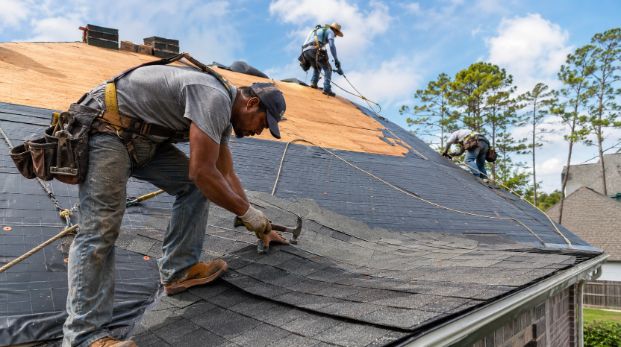
If you’ve talked to anyone about roof replacement in South Louisiana lately, you’ve probably heard the word FORTIFIED come up. It’s not a marketing term. It’s a specific construction standard, and over the past couple of years the state has built real money around it, grants, tax credits, and now mandatory insurance discounts. That’s changed the math on whether it’s worth paying more for a FORTIFIED roof compared to a standard replacement.
Here’s an honest breakdown of what actually separates the two, what it costs, and what you get back.
What Makes a Roof FORTIFIED
FORTIFIED is a construction standard developed by the Insurance Institute for Business & Home Safety, a research group funded by insurers to study what actually keeps roofs attached during hurricanes. It’s not a shingle brand or a product line. It’s a set of construction requirements your roofer follows and a certified evaluator inspects before and after the job.
There are three tiers: FORTIFIED Roof, FORTIFIED Silver, and FORTIFIED Gold. FORTIFIED Roof, the entry tier and the one most homeowners pursue, focuses entirely on the roof system itself. Silver and Gold add wall and opening protections on top of that, which matter more for new construction than a straightforward re-roof.
The Real Construction Differences
A standard roof replacement in Louisiana meets the building code, but code is a minimum, not a performance target. Here’s where a FORTIFIED roof actually differs in the field:
Sealed roof deck. Every seam in the plywood decking gets taped or sealed, usually with self-adhering membrane or sealed fasteners, so that even if shingles are torn off in a storm, wind-driven rain can’t get into the attic. This is the single biggest difference and the one that prevents the worst interior damage after a storm.
Ring-shank nails instead of standard nails. These have a ridged shank that grips the decking far more securely, which is a direct answer to the nail-pop problem we see on older standard roofs across South Louisiana.
Enhanced attachment at the edges. Roof edges, rakes, and eaves are where wind uplift concentrates first. FORTIFIED specs call for wider, more secure attachment in exactly those zones, using specific nailing patterns rather than whatever spacing meets minimum code.
Improved flashing and venting requirements. Flashing details and attic ventilation both have to meet a higher, inspected standard rather than a builder’s judgment call.
None of this is exotic material. It’s mostly about how the roof is put together, which is why the cost difference, while real, isn’t as extreme as people expect.
What It Actually Costs
A standard asphalt shingle replacement on a typical South Louisiana home runs in a fairly predictable range depending on square footage and roof complexity. A FORTIFIED upgrade typically adds a percentage on top of that for the sealed decking, upgraded fasteners, and the mandatory third-party evaluation before and after construction, since that inspection isn’t optional. It’s part of how the roof gets certified.
Where this gets interesting is what Louisiana has built to offset that gap.
The Money Louisiana Puts Behind FORTIFIED
This is the part that changes the decision for a lot of homeowners, and it’s worth understanding all three pieces separately because they work differently.
The Louisiana Fortify Homes Program grant. This is a state grant, up to $10,000, that covers construction costs to bring an existing roof up to FORTIFIED Roof standard. It’s funded through a mix of surplus insurance funds and a statewide policy surcharge, and demand has consistently outpaced the funding available, so homeowners get in through a lottery rather than first-come, first-served. Grant rounds open periodically, with eligibility now covering a wide list of South Louisiana parishes. If you’re selected, the grant doesn’t cover everything, a typical FORTIFIED install still runs above $10,000 total, but it closes most of the gap between a standard roof and a certified one.
The FORTIFIED Roof Tax Credit. Separate from the grant, this is a state income tax credit worth up to $10,000 for homeowners who install or retrofit their roof to FORTIFIED standard. It can’t be combined with the grant for the same expenses, but if you don’t get selected in the grant lottery, the tax credit is a real second path to the same financial outcome.
Mandatory insurance discounts. This is the newest and, for most homeowners, the most valuable piece long-term. Louisiana has moved from encouraging insurers to offer FORTIFIED discounts to actually requiring benchmark discount ranges on the hurricane portion of your premium, tiered by region and by which FORTIFIED level you hold. For homeowners in South Louisiana’s high-wind zones, that discount is meaningfully larger than it is further inland, which makes sense given the underlying risk math insurers are pricing against.
Stacked together, a grant or tax credit that covers most of the upfront gap, plus an annual insurance discount that continues for the life of the roof, is why FORTIFIED has gone from a niche upgrade to something the state is actively pushing homeowners toward.
So Is It Worth It
For most South Louisiana homeowners who are already due for a roof replacement, yes. You’re not choosing between a cheap roof and an expensive one from scratch, you’re choosing between a standard version of a roof you already need and a certified version that costs somewhat more upfront but comes with a state grant or tax credit to close most of that gap, plus a permanent reduction in your wind insurance costs going forward.
Where it’s a closer call is if your current roof still has real life left in it. FORTIFIED is a construction standard applied during installation, not something you retrofit onto an existing roof without redoing the decking work. It doesn’t make sense to tear off a roof early just to chase the standard. But if you’re already looking at replacement due to age, storm damage, or the kind of wear we covered in our piece on warning signs your roof won’t survive another hurricane season, this is the moment to ask your roofer about the FORTIFIED path rather than defaulting to standard.
Not every roofing crew is set up to do FORTIFIED work correctly. It requires a certified installer and coordination with a third-party evaluator at specific points in the project, and skipping steps means the certification doesn’t hold up when you go to claim the insurance discount. If you’re weighing a FORTIFIED upgrade on your next roof, we can walk you through what your specific home would need, what the realistic cost gap looks like after grants and credits, and whether the current lottery round is open in your parish.