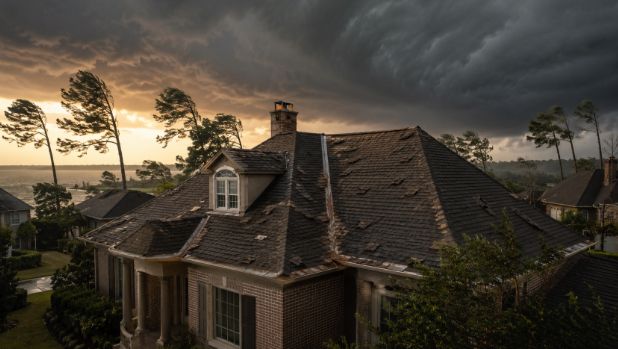
Every June, homeowners across Tangipahoa, Livingston, and St. Tammany parishes ask us the same question: will my roof hold up this year? After Ida stripped shingles off entire subdivisions in 2021 and Laura did the same further west, it’s not a paranoid question anymore. It’s a practical one.
Here’s the thing about hurricane damage: it rarely starts the night the storm hits. It starts months, sometimes years, earlier, with small problems that quietly get worse until 90 mph gusts find the weak spot and rip it open. We’ve walked hundreds of roofs across South Louisiana after storms, and the roofs that failed almost always showed warning signs beforehand. Here’s what to look for before this season gets going.
1. Shingles That Are Curling or Cupping at the Edges
Louisiana’s mix of intense heat, high humidity, and sudden downpours is brutal on asphalt shingles. When the edges start curling upward or cupping like a shallow bowl, the seal underneath has broken down. That curled edge is exactly what a hurricane gust grabs onto first. If you can see daylight under the edge of a shingle from the ground, the wind won’t need much encouragement to finish the job.
2. Granules Piling Up in Your Gutters
Shingle granules do more than give your roof its color. They protect the asphalt layer underneath from UV damage and help shed water. If you’re finding what looks like coarse sand collecting in your gutters or at the base of your downspouts after a normal rain, your shingles are shedding their protective layer. A roof losing granules at a noticeable rate usually has five years or less of real protection left, sometimes less if it’s already been through a storm season or two.
3. Soft or Spongy Spots When You Walk the Attic
This one’s harder to catch because it’s hidden, but it’s one of the most dangerous signs on this list. Walk your attic (carefully, staying on the joists) and press on the roof decking near vents, chimneys, or any past leak spots. If it feels soft, spongy, or gives slightly under pressure, water has been getting into the plywood decking. Wet decking loses its structural strength, and that’s exactly where a roof will fail first when wind uplift starts pulling at it.
4. Nail Pops and Exposed Fasteners
Look along your roofline and ridge caps for small bumps or shingles that look slightly raised in a row. That’s usually a sign of nail pops, where fasteners have backed out due to thermal expansion and contraction. South Louisiana’s swing between summer heat and sudden cold fronts is rough on roofing nails. Exposed or backed-out fasteners mean your shingles aren’t as securely attached as they should be, which matters a lot when sustained winds are trying to peel them off.
5. Flashing That’s Rusted, Cracked, or Pulling Away
Flashing around chimneys, skylights, and roof valleys is one of the first places we check after any storm because it’s one of the most common failure points. Rusted, cracked, or lifted flashing creates a direct path for wind-driven rain to get under your roofing material. During a hurricane, rain doesn’t fall straight down. It comes in sideways, and it will find any gap in flashing within the first hour of a storm.
6. Your Roof Is Past 20 Years Old (and Hasn’t Been Reinforced)
Standard asphalt shingle roofs in our climate are generally rated for 20 to 25 years, but that’s under ideal conditions, which South Louisiana rarely provides. If your roof was installed before 2005 and hasn’t had a wind mitigation upgrade or reinforcement since, it likely doesn’t meet current Louisiana building code wind resistance standards. Homes built or re-roofed after the state adopted stricter wind uplift requirements tend to fare significantly better in storms than older roofs with original decking and fastening.
7. Visible Sagging Along the Roofline
Stand across the street and look at your roofline from end to end. A straight, even line is what you want to see. Any dip, wave, or sag, especially near the ridge or over the garage, points to a structural issue in the decking or trusses underneath. Sagging roofs are structurally compromised, and structurally compromised roofs are the ones that come apart first when a hurricane’s outer bands start testing every weak point.
What to Do If You’re Seeing These Signs
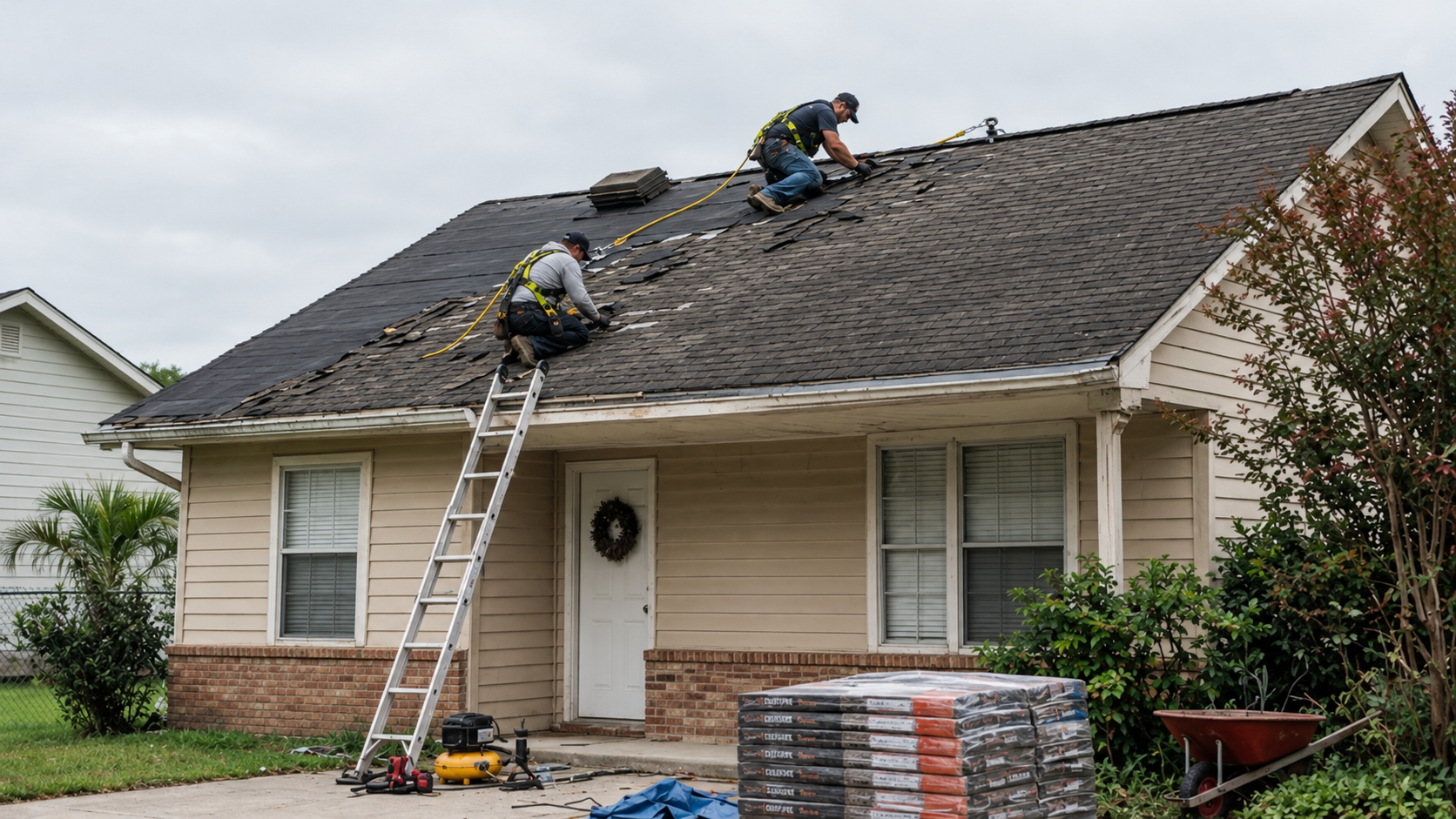
None of these signs mean you automatically need a full roof replacement. Some, like nail pops or minor flashing issues, are quick repairs. Others, like spongy decking or a sagging roofline, usually mean it’s time for a real conversation about replacement before storm season is in full swing.
What matters most is timing. Roofing crews across South Louisiana get booked solid the moment a storm is named and tracking toward the Gulf. Getting an inspection now, while the weather’s calm, gives you options: repair versus replace, financing versus insurance claim, and enough lead time to actually get the work scheduled instead of waiting in a post-storm queue with half the parish.
If you’ve noticed one or more of these signs on your home, it’s worth having someone take a storm damage restoration check, not just a drive-by glance from the street. We inspect roofs across the South Louisiana area and can tell you honestly whether you’re looking at a simple repair or something more serious, before the next storm makes that decision for you.