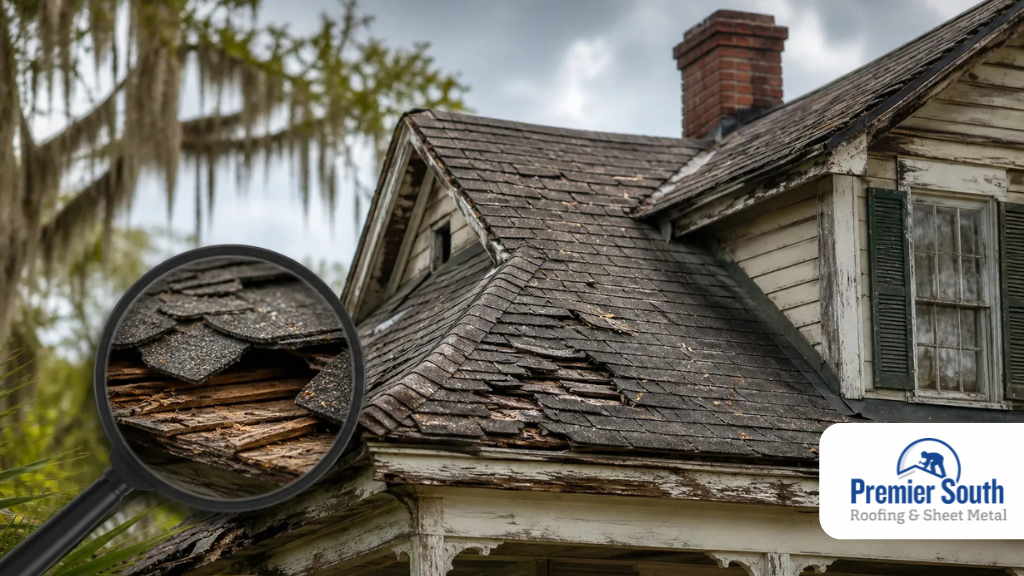
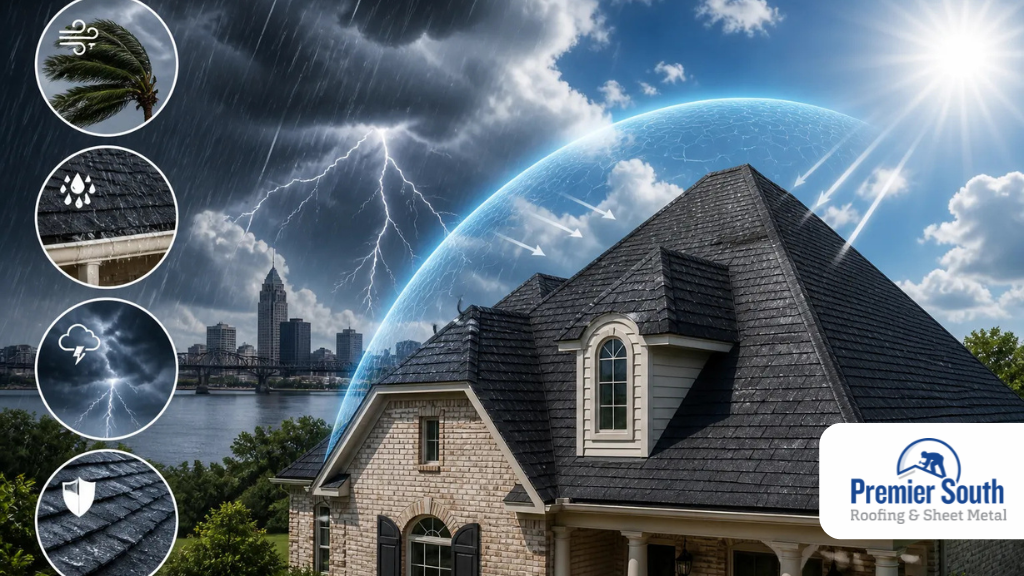
Baton Rouge sits in the heart of one of the most weather-punished regions in North America. Every hurricane season, homeowners across East Baton Rouge Parish watch the sky and wonder whether their roof will make it through. Tropical storms, Category 3 and above hurricanes, torrential rain, and brutal summer heat are not occasional inconveniences here, they are a way of life. A standard builder-grade roof, even a newer one, is simply not designed to handle what Louisiana can throw at it.
That is where the FORTIFIED™ roofing standard comes in. Developed by the Insurance Institute for Business & Home Safety (IBHS), the FORTIFIED program establishes a set of construction requirements that go significantly beyond what the Louisiana State Uniform Construction Code demands as a minimum. For Baton Rouge homeowners, understanding what makes a FORTIFIED roof different, and what the upgrade process actually involves, is one of the most important home improvement decisions you can make.
Understanding Baton Rouge’s Roofing Challenges
Before diving into what a FORTIFIED roof is, it helps to understand exactly what your roof is fighting against every year.
Hurricane and Tropical Storm Wind Loads, Baton Rouge falls within a high-wind zone. Per ASCE 7-22 (the standard referenced by the Louisiana State Uniform Construction Code), residential structures in East Baton Rouge Parish must be designed for wind speeds of 130 mph or higher in some areas. During Hurricane Ida in 2021, wind gusts across the region exceeded 100 mph and caused catastrophic roof failures on homes of all ages. Many of those failures began not at the shingles, but at the structural connections underneath.
Torrential Rainfall and Water Infiltration, Baton Rouge averages more than 60 inches of rainfall per year. A roof that loses even a few shingles during a storm, or that has inadequate underlayment, can allow water intrusion that destroys insulation, sheathing, and interior framing within hours.
Extreme Heat and UV Exposure, Prolonged exposure to Louisiana’s intense sun degrades standard asphalt shingles faster than manufacturers’ warranties often anticipate. Thermal expansion and contraction also work fasteners loose over time, reducing the uplift resistance of your roof system.
Hail, While less common than wind events, hail storms do track through the Baton Rouge metro and can crack shingles, damage flashing, and compromise the granule layer that protects your roof from UV deterioration.
What Is a FORTIFIED Roof?
The IBHS FORTIFIED Home™ program has three designation levels: Roof, Silver, and Gold. For most Baton Rouge homeowners, the FORTIFIED Roof designation is the critical first step, and the one that delivers the greatest bang for the buck in terms of storm resilience and insurance savings.
A FORTIFIED Roof certification means the entire roof system has been built or upgraded to meet a specific set of requirements covering:
- Sealed roof deck, The deck is sealed so that if shingles are blown off, water cannot penetrate the structure.
- High-wind-rated shingles or metal roofing, Materials are rated to resist the wind speeds relevant to the local wind zone.
- Enhanced edge sealing, The roof edge, one of the most vulnerable points in any wind event, is reinforced with specific drip edge and adhesive requirements.
- Ring-shank nails or equivalent fasteners, Standard smooth-shank nails are replaced with fasteners that dramatically increase pull-through resistance in the deck.
- Third-party inspection and certification, An IBHS-approved inspector must verify the work before a designation certificate is issued.
Premier South Roofing is a certified FORTIFIED contractor in Louisiana. You can learn more about our FORTIFIED Roofing Program and what the designation process looks like for your home.
Louisiana Building Code Upgrade Requirements
One of the most important things homeowners need to understand is that a FORTIFIED designation is not the same as meeting minimum building code. The Louisiana State Uniform Construction Code adopts the International Residential Code (IRC) and references ASCE 7 for wind loads, but those are minimum standards. FORTIFIED requirements exceed them in several measurable ways.
When you pursue a FORTIFIED upgrade, or when your home undergoes a full roof replacement, your contractor must ensure compliance with all applicable code requirements as well as the FORTIFIED standard. For Baton Rouge, that means:
Wind Zone and Exposure Category
East Baton Rouge Parish generally falls into Wind Zone II under the IBHS classification system, requiring shingles rated to ASTM D3161 Class F (110 mph) or ASTM D7158 Class H (150 mph), depending on the specific location. Metal roofing must meet comparable ratings. Your contractor should pull the current wind speed map for your specific address, not just the parish-wide default, because exposure category (B, C, or D) based on surrounding terrain affects the required design wind pressure.
Sealed Deck Requirements
Under the FORTIFIED standard, the entire roof deck must be sealed using one of the following methods:
- Self-adhering polymer-modified bitumen underlayment applied over the full deck surface
- Spray polyurethane foam applied to the underside of the deck from the attic
- Rigid foam insulation properly adhered to the deck
Louisiana’s hot, humid climate makes the choice of sealed deck product important. Vapor permeability matters here, a sealed deck product that traps moisture in the structure can create mold and rot issues over time. This is an area where an experienced Louisiana roofing contractor, familiar with local climate conditions, is invaluable.
Drip Edge and Edge Metal
FORTIFIED requires a minimum 26-gauge galvanized steel or aluminum drip edge that extends at least 2 inches onto the roof deck. This must be fully adhered, not simply nailed in place. The 2021 updates to the IBHS standard also require kick-out flashing at all roof-to-wall transitions, a detail that is still routinely skipped on many code-compliant installations.
Fastener Upgrades
Under the standard IRC, shingle fasteners must be corrosion-resistant and long enough to penetrate the deck by a specified amount. Under FORTIFIED, ring-shank nails are required in high-wind zones. These nails have dramatically higher pull-through resistance than the smooth-shank nails or staples that many installers default to. Premier South’s hand-nailing process, rather than nail gun installation, ensures proper nail seating and eliminates the risk of over-driving that can compromise shingle integrity.
Insurance Implications of Code Compliance
Louisiana’s Strengthen + Fortify (SIF) program and the Louisiana Citizens Property Insurance Corporation both offer premium discounts for FORTIFIED-certified homes. In some cases, homeowners report premium reductions of 20–30% or more. Beyond discounts, a FORTIFIED designation may also protect you in a claims dispute, since the certification documents that your roof was built to a defined and inspected standard.
Structural Inspections: Rafters and Roof Decking
Here is something many homeowners do not realize until they are mid-project: a FORTIFIED upgrade, and any responsible full roof replacement, should include a thorough structural inspection of the rafters and decking before new materials are installed. Laying a FORTIFIED-grade roof system on compromised structural framing is like installing new tires on a car with a broken axle.
Why Rafter Inspections Matter
Rafters are the primary structural members of your roof. In older Baton Rouge homes, they were often sized and spaced to meet the code standards of their era, which may not meet current wind load requirements. Several specific concerns need to be evaluated:
Rafter-to-top-plate connections, This is the joint where the rafter sits on the exterior wall framing. In many homes built before 2000, these connections consist of nothing more than a toe-nail, a nail driven at an angle through the rafter into the plate. Under high-wind uplift loads, toe-nails are the first thing to fail. The current code (and the FORTIFIED standard) requires metal hurricane straps or clips at each rafter-to-plate connection. During an inspection, these connections should be visually verified from inside the attic.
Rafter span and size, Rafters that are under-sized for their span will deflect excessively under load, causing roofing materials to separate at seams and valleys. An inspector should verify that rafter dimensions are consistent with the current span tables for the applicable lumber species and grade.
Evidence of prior damage, Darkening, staining, or soft spots on rafters can indicate prior water infiltration that has begun to compromise the wood’s structural integrity. Cracked or split rafters, or those that have shifted off their bearing points, need to be addressed before any overlay or replacement work begins.
Ridge board condition, The ridge board at the peak of the roof takes significant stress in high-wind events. It should be inspected for splitting, checks (surface cracks along the grain), and proper connections to the gable end framing.
Our team conducts thorough residential roof inspections that include attic access and structural evaluation, not just a visual scan from the driveway.
Roof Deck (Sheathing) Inspections
The roof deck, typically oriented strand board (OSB) or plywood, is the substrate to which all roofing materials attach. It is also the component that the FORTIFIED sealed deck requirement addresses most directly. During a pre-installation inspection, several issues should be checked:
Delamination, Repeated moisture cycles can cause OSB and plywood panels to delaminate, meaning the layers begin to separate. Delaminated panels lose their structural integrity and cannot hold fasteners properly, meaning shingles and underlayment installed over them will have far lower uplift resistance than the manufacturer’s specifications assume.
Rot, Persistent roof leaks, especially around penetrations like pipe boots, skylights, and chimneys, often create localized rot in the deck. These areas must be cut out and replaced with new, properly fastened panels before any FORTIFIED upgrade can proceed.
Edge gaps and panel spacing, OSB and plywood panels must be installed with a 1/8-inch gap between them to allow for expansion. Panels installed tight against each other can buckle when they absorb moisture, creating ridges in the finished roof surface and stress concentrations at panel edges. These conditions should be documented and repaired as part of the upgrade.
Panel thickness, For most residential applications in the FORTIFIED program, a minimum 7/16-inch OSB or 15/32-inch plywood is required. Older homes occasionally have thinner boards or even skip sheathing (spaced boards), which must be replaced entirely to meet current requirements.
Fastening pattern, Even sound deck panels can be inadequately fastened. The FORTIFIED standard specifies nailing patterns for deck panels, typically 6 inches on center at panel edges and 12 inches in the field, that are more robust than the minimum IRC requirements.
If your home has suffered storm damage in recent years, a pre-installation structural inspection is especially important. Our storm damage repair process always begins with a thorough evaluation of what is underneath the surface, because hidden structural damage is one of the most common, and costly, surprises in roofing projects.
The Right Materials for Baton Rouge’s Climate
Once the structural inspection is complete and any necessary repairs are made, material selection becomes the next critical decision. Not all FORTIFIED-rated products perform equally well in Louisiana’s specific climate conditions.
Impact-Resistant and Wind-Rated Shingles
For homes that will use asphalt shingles, FORTIFIED requires shingles that carry a specific wind rating. In Baton Rouge’s wind zone, Class H shingles (rated to 150 mph) are the recommended choice, though Class F shingles may be acceptable depending on your exact location. Impact-resistant shingles, those rated Class 4 under UL 2218, add another layer of protection against hail and also frequently qualify for additional insurance discounts.
Metal Roofing
Standing seam metal roofing is one of the most resilient options available for Louisiana homeowners and is fully compatible with FORTIFIED certification. Metal roofing eliminates many of the failure modes associated with shingles, individual panels cannot be progressively peeled off by wind, and can be engineered to meet very high wind speed ratings. Premier South custom fabricates metal roofing in-house, which allows for precise fitting and eliminates the field-cut compromises that can create weak points in the system.
Underlayment
Under FORTIFIED, standard 15-pound or 30-pound felt underlayment does not meet the sealed deck requirement. A self-adhering modified bitumen product must be used across the full deck, or a spray-applied alternative must be used from below. The underlayment choice must account for Louisiana’s heat, some self-adhering products can become soft and lose adhesion at sustained high temperatures. Products specifically rated for high-temperature applications are the correct choice for Baton Rouge installations.
The FORTIFIED Certification Process Step by Step
Understanding the process helps homeowners plan their project timeline and budget appropriately.
Step 1: Hire a FORTIFIED-approved contractor, Not every roofing company can certify a FORTIFIED roof. Premier South holds the necessary IBHS designation. Contact us to discuss your project.
Step 2: Pre-installation structural inspection, As described above, a thorough inspection of rafters, ridge board, and deck panels is conducted before any new material is installed. Any deficiencies are documented and priced for repair.
Step 3: Install to FORTIFIED standards, All work is performed to meet or exceed the IBHS FORTIFIED Roof requirements for your wind zone, including sealed deck, edge metal, fasteners, and rated shingles or metal panels.
Step 4: Third-party inspection, An IBHS-approved inspector, someone independent of the roofing contractor, visits the site to verify compliance before the roof is fully closed in. This inspection typically covers the deck sealing, fastening pattern, edge metal installation, and connection hardware.
Step 5: Receive your designation certificate, Upon passing inspection, IBHS issues a formal FORTIFIED Roof designation certificate. This document is what you present to your insurance carrier to apply for applicable discounts.
How Much Does a FORTIFIED Roof Cost in Baton Rouge?
FORTIFIED upgrades typically add a modest premium over a standard roof replacement, estimates often range from 10% to 20% more, depending on the scope of structural repairs needed and the materials selected. However, that cost must be weighed against the value returned:
- Insurance premium savings that can recover the upgrade cost within a few years
- Reduced likelihood of catastrophic storm damage and the financial and logistical burden of filing a major insurance claim
- Increased home resale value, as buyers in Louisiana are increasingly aware of FORTIFIED designations
- Peace of mind during hurricane season
For commercial property owners, the calculus is similar. A FORTIFIED-grade commercial roof protects business assets, reduces interruption risk, and can lower commercial property insurance costs. Learn more about our commercial roofing services and how FORTIFIED standards apply to business properties.
Frequently Asked Questions
Can I get a FORTIFIED designation on an existing roof? In most cases, no. The FORTIFIED standard requires the installation of a sealed deck, which typically requires removing the existing roofing materials. However, the spray foam application method can sometimes be applied from inside the attic without a full tear-off. A project assessment will determine which approach is feasible for your home.
Does FORTIFIED mean my roof is hurricane-proof? No roof is unconditionally hurricane-proof. FORTIFIED means your roof is substantially more resilient than code-minimum construction and has been independently verified. In most storm events that cause widespread damage to standard roofs, FORTIFIED roofs perform significantly better, but extreme events can damage any structure.
How long does a FORTIFIED Roof designation last? FORTIFIED designations are issued once and remain valid as long as the roof system is not materially altered. If you replace roofing materials, add penetrations, or make significant modifications, you should contact Premier South to determine whether a re-certification inspection is needed.
Do all Louisiana insurance companies offer FORTIFIED discounts? Not all carriers offer discounts, but many do, particularly those participating in the Louisiana SIF program or Citizens Property Insurance. We recommend contacting your insurer before beginning your project to confirm what documentation they require and what discount you may qualify for.
Schedule Your Free Roof Inspection Today
If you are a Baton Rouge homeowner wondering whether your roof can survive the next major storm, the first step is a professional inspection, not a guess from the ground. Premier South Roofing provides free, comprehensive roof inspections that evaluate not just the surface materials, but the structural integrity of the framing and deck underneath.
Whether you are considering a FORTIFIED upgrade, dealing with recent storm damage, or simply overdue for a professional assessment, our team is ready to help. Schedule your free inspection today and get the honest, detailed information you need to make the right decision for your home.
Premier South Roofing & Sheet Metal has served Baton Rouge, Lafayette, New Orleans, the North Shore, and surrounding communities for over 15 years. Our certified crews use hand-nailed, time-tested installation techniques to deliver roofing systems built for Louisiana weather.