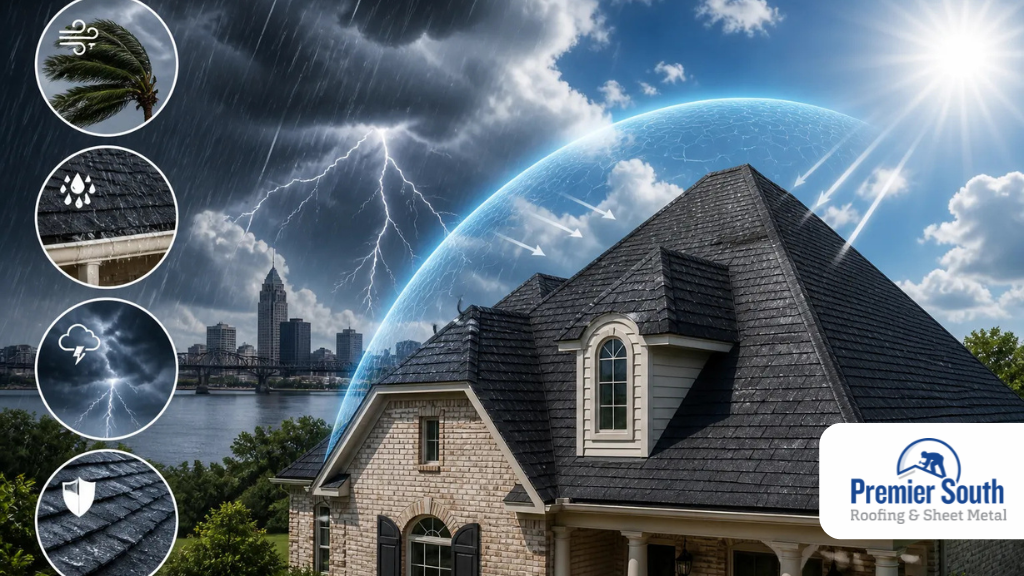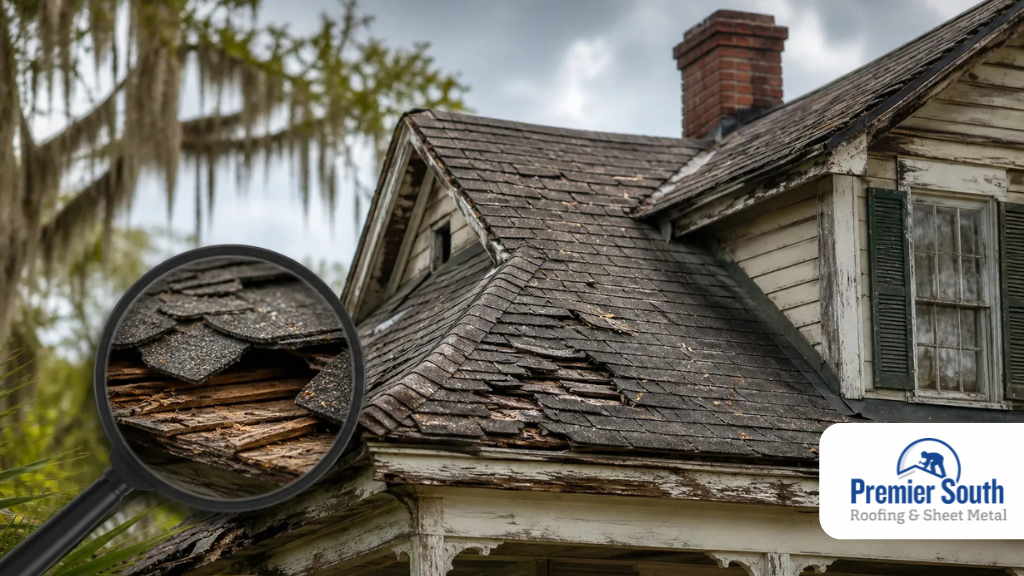
If you own a commercial building in Louisiana, your roof faces conditions that would challenge roofing systems anywhere else in the country. Between hurricane-force winds, relentless summer heat, near-constant humidity, and over 60 inches of annual rainfall, commercial roofs here are under attack every single day. The business owners who understand this, and respond with a proactive maintenance strategy, protect their investments, reduce operating costs, and avoid the kind of catastrophic surprises that shut operations down for weeks.
This guide covers everything Louisiana business owners need to know about commercial roof maintenance: what to inspect, when to inspect it, how Louisiana’s unique climate changes the rules, and what a proper maintenance plan actually looks like. Whether your building is in Baton Rouge, New Orleans, Lafayette, or anywhere across Southeast Louisiana, the principles here apply directly to your property.
Why Commercial Roof Maintenance Is Especially Critical in Louisiana
Most commercial roofing guides are written for a national audience. Louisiana is not a national climate, it’s one of the most demanding roofing environments in North America, and generic advice often misses the mark.
Here’s what makes Louisiana different:
Hurricane and tropical storm season runs from June through November. That’s half the year during which your roof can take wind speeds exceeding 100 mph, saturating rain for hours at a stretch, and flying debris that punctures membranes without warning.
Humidity is a year-round threat. Louisiana averages 74–76% relative humidity. Moisture is constantly looking for a way into your roofing system. When it finds it, through a hairline seam crack, a compromised flashing point, or a clogged drain, it doesn’t stop at the roof deck. It moves into insulation, wall cavities, electrical systems, and inventory.
UV exposure accelerates material degradation faster than in northern states. The intense Gulf Coast sun causes thermal expansion and contraction that weakens seams, dries out sealants, and makes membrane materials brittle over time.
Flat and low-slope roofs are the standard for commercial buildings, and they’re the most vulnerable to ponding water. Even minor drainage issues can leave hundreds of gallons sitting on your roof after a heavy rain, adding structural weight and dramatically accelerating surface deterioration.
The bottom line: commercial roof maintenance in Louisiana is not optional. It is a business continuity strategy.
The Most Common Commercial Roofing Problems in Louisiana
Knowing what typically fails, and why, helps you prioritize what to look for during inspections and maintenance visits.
1. Ponding Water and Drainage Failures
Flat commercial roofs depend entirely on their drainage systems to shed water quickly. When gutters clog, drains slow, or slight structural settling creates low spots, water pools on the surface. Standing water adds weight that can stress the roof deck, and prolonged contact accelerates membrane breakdown, promotes mold growth, and eventually finds a path inside.
After any significant rainfall, look for areas on your roof where water sits longer than 48 hours. This is a drainage problem that needs to be corrected, not monitored.
2. Membrane Punctures and Seam Failures
TPO, PVC, and EPDM single-ply membrane systems are widely used on Louisiana commercial buildings for their cost-effectiveness and weather resistance. But they are vulnerable to punctures from foot traffic, rooftop HVAC work, and storm debris. Seams, where membrane sections overlap and are bonded together, are the most common failure point. Heat and UV exposure cause seam adhesion to degrade over time, creating pathways for water intrusion.
3. Flashing Deterioration
Flashing seals the roof at every penetration point: HVAC units, plumbing vents, skylights, parapet walls, and roof edges. These transitions are the weakest points in any commercial roof system. Metal flashing expands and contracts with temperature changes, and sealants dry out and crack in Louisiana’s heat. When flashing fails, water doesn’t trickle in, it pours.
4. Wind Uplift Damage
Hurricane-force winds don’t just blow debris onto your roof. They create negative pressure, uplift, that tries to pull the roof membrane away from the deck. Areas around perimeter edges, corners, and penetrations are most vulnerable. Even sub-hurricane wind events (which Louisiana experiences frequently) can loosen edge metal, shift flashing, and begin the process of membrane separation.
5. UV and Heat Degradation
Over time, Louisiana’s intense solar radiation causes roofing materials to oxidize, become brittle, and lose their waterproofing properties. Modified bitumen roofs may develop surface cracking. Sealants shrink and pull away from joints. Roof coatings thin and lose their reflectivity. This is a slow, invisible process, which is exactly why regular inspections matter.
How Often Should Louisiana Commercial Roofs Be Inspected?
The standard recommendation for commercial roof inspections is twice per year, spring and fall. In Louisiana, that calendar needs to be adapted to your actual risk environment.
Before hurricane season (April–May): Get a professional inspection completed before June 1. You want to know the exact condition of your roof going into the most dangerous weather period of the year. Any issues discovered, loose flashing, membrane blistering, slow drains, should be repaired before a storm tests them.
After significant storm events: Any time a tropical storm, hurricane, or severe thunderstorm moves through your area, schedule a post-storm inspection, even if you don’t see obvious damage from the ground. Wind uplift damage, membrane punctures from debris, and dislodged flashing often aren’t visible without getting on the roof with trained eyes. Catching these issues immediately matters enormously for insurance claims, documented post-storm damage, repaired promptly, is far better than discovering months later that a small impact has become a major leak.
After hurricane season (November–December): A full end-of-season inspection assesses the cumulative effect of the storm season and sets you up with accurate condition data heading into winter. While Louisiana winters are mild, temperature fluctuations still stress roofing materials, and this is a good time to address anything that built up over the summer.
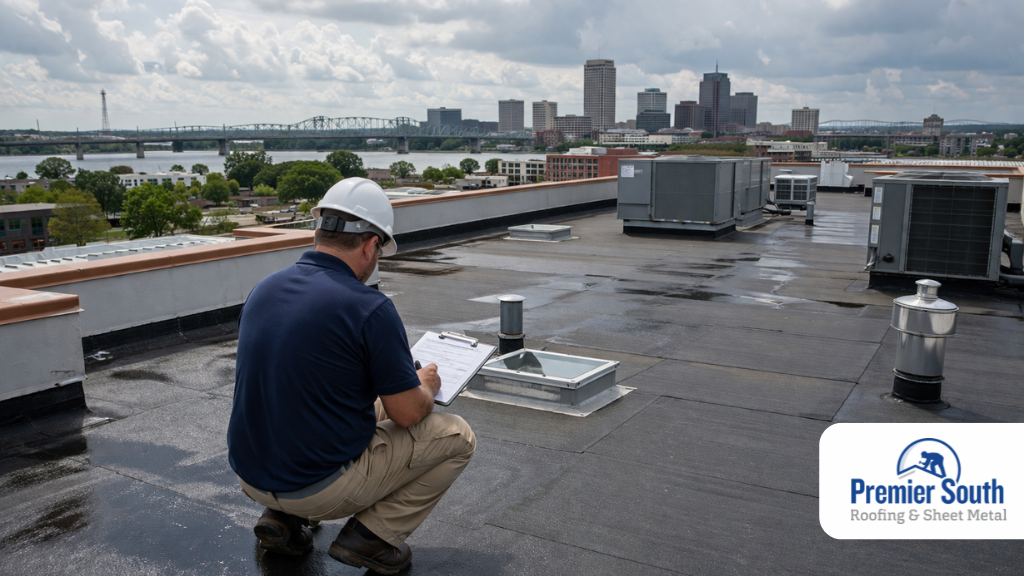
Quarterly visual checks by facility staff: Between professional inspections, train your maintenance team to do simple walkthroughs: check that roof drains are clear, look for obvious debris accumulation, and report any interior signs of moisture, ceiling stains, musty odors, or water marks near exterior walls.
A Seasonal Commercial Roof Maintenance Checklist for Louisiana
Spring (Pre-Hurricane Season): April–May
- Remove all debris accumulated over winter: leaves, branches, and anything that can clog drains
- Clear all roof drains and gutters completely, test drainage with water if needed
- Inspect all membrane seams and look for separations, blistering, or bubbling
- Check all flashing at penetrations, parapet walls, and roof edges; replace dried or cracked sealant
- Inspect any rooftop HVAC equipment mounts and verify they haven’t shifted or created membrane stress
- Look for ponding areas and investigate drainage solutions for any that persist
- Document all conditions with photographs, this becomes your baseline for post-storm comparisons
- Schedule any needed repairs before June 1
Summer (Active Storm Monitoring): June–September
- After each significant rain event, check for interior signs of water intrusion: new stains, drips, or wet insulation
- After any tropical storm or hurricane, schedule a professional inspection immediately
- Keep drains and gutters clear of storm debris throughout the season
- Document any storm events that affect your property for insurance records
Fall (Post-Season Assessment): October–November
- Schedule a full professional inspection to assess cumulative storm season damage
- Replace any sealants or coatings that degraded over the summer heat
- Address ponding water issues before winter rain increases the frequency of standing water
- Review your maintenance documentation and update your records
Winter (Ongoing Monitoring): December–March
- Monitor for condensation issues, Louisiana’s humidity means interior condensation can be as problematic as exterior leaks
- Keep drains clear during heavy winter rain periods
- Schedule any planned maintenance work during the drier, cooler months when roofing work is safer and more comfortable
The Business Case for Preventative Maintenance: What It Actually Costs You to Skip It
Business owners sometimes defer roof maintenance as a cost-saving measure. The math rarely works out.
Reactive repairs vs. planned maintenance: A professional inspection and basic maintenance visit typically costs a few hundred to a couple of thousand dollars depending on roof size and scope. A single commercial roof repair after a significant leak, which may include not just roofing materials but water-damaged insulation, decking, interior finishes, and equipment, can easily run $5,000–$25,000 or more.
Premature roof replacement: Commercial roof systems that receive consistent maintenance routinely reach or exceed their rated lifespans. Systems that don’t may need replacement a decade early. On a commercial building of any size, a full roof replacement represents a major capital expense, often $8–$15 per square foot or more depending on system type. For a 10,000 square foot roof, cutting the system’s life short by 10 years through deferred maintenance may cost you $80,000–$150,000 or more in premature replacement costs.
Warranty compliance: Most commercial roofing manufacturer warranties require documented regular maintenance to remain valid. If you have a 15- or 20-year warranty on your roofing system and skip inspections, you may find that a claim is denied because you can’t prove the roof was maintained per warranty terms. This is a significant and easily avoided risk.
Insurance claims: Louisiana property insurers are paying close attention to commercial roof maintenance records. When a storm damage claim is filed, insurers may investigate whether pre-existing maintenance issues contributed to the damage. A well-documented maintenance history supports your claim; an absent one can undermine it.
What a Commercial Roof Maintenance Plan Should Include
A proper maintenance plan from a qualified Louisiana commercial roofing contractor should include more than just an annual visit. Look for plans that cover:
Bi-annual professional inspections with written reports and photographs documenting the full condition of the roof system, including all penetrations, flashings, drains, seams, and surface.
Post-storm inspection protocol, your contractor should have a defined process for responding to significant weather events, ideally within days rather than weeks.
Preventative repairs included or clearly scoped, minor seam sealing, drain clearing, and sealant replacement should be part of routine visits, not surprise add-ons.
Written documentation for every visit, this is what protects your warranty coverage and supports insurance claims if needed.
Escalation process for major issues, when an inspection reveals damage beyond routine maintenance scope, your contractor should provide a clear repair or replacement recommendation with transparent pricing. Our commercial roofing division regularly inspects commercial roofs for damage that could lead to costly issues, and their team of specialists with combined 40+ years of industry experience works with business owners to build long-term, cost-effective solutions.
FORTIFIED Roofing: A Louisiana-Specific Upgrade Worth Knowing About
For Louisiana business owners looking to go beyond standard maintenance and invest in genuine storm resilience, the FORTIFIED Roof™ standard, developed by the Insurance Institute for Business & Home Safety (IBHS), is worth serious consideration.
FORTIFIED roofing systems are engineered and installed to specific standards designed to resist wind, hail, and rain infiltration at levels well above conventional construction. Buildings with FORTIFIED roofs often qualify for meaningful insurance discounts in Louisiana, and they simply perform better when storms arrive. Our commercial roofing services include FORTIFIED roofing solutions for business owners who want to maximize their building’s storm resilience. If you’re facing a roof replacement in the near future, it’s worth asking whether a FORTIFIED system makes sense for your property.
Frequently Asked Questions
How often should a commercial roof in Louisiana be inspected?
At minimum, twice per year, before hurricane season (April/May) and after hurricane season (November). Additional inspections are strongly recommended after any significant storm event. Quarterly visual walkthroughs by facility staff complement professional annual and post-storm visits.
What’s included in a commercial roof maintenance visit?
A thorough maintenance visit should include a full visual inspection of all roof surfaces, seams, flashings, and penetrations; commercial gutters and drains clearing; minor sealant replacement; debris removal; and a written report with photographs documenting current conditions.
Does skipping maintenance void my roof warranty?
Yes, it can. Most commercial roofing manufacturer warranties require documented regular maintenance. Without maintenance records, warranty claims related to materials or workmanship may be denied.
What roofing materials does Premier South work with on commercial buildings?
Premier South’s commercial division works with TPO, PVC, modified bitumen, mechanically seamed metal, standing seam metal, and a variety of roof coatings. Their in-house metal fabrication capability allows for custom metal roofing solutions.
How soon should I get an inspection after a hurricane?
As soon as it’s safe to access the building, ideally within 2–3 days of the event. Prompt documentation of storm damage is critical for insurance claims, and delaying inspection can allow minor damage to worsen significantly.
Can my commercial roof be restored instead of replaced?
In many cases, yes. Roof coatings and restoration systems can extend the life of an existing commercial roof by 10–20 years at a fraction of replacement cost, but only when the underlying system is structurally sound and the insulation is dry. A professional inspection will determine whether restoration is a viable option for your roof.