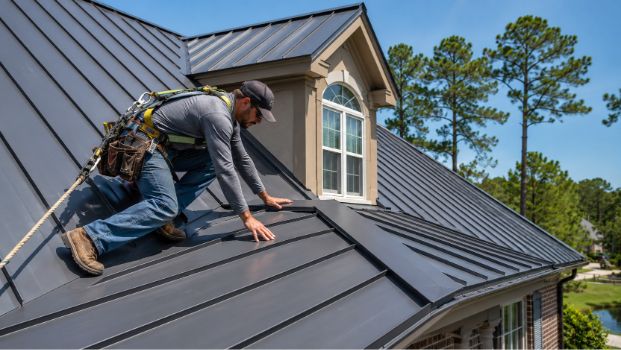
Metal roofing has gone from a niche choice to one of the most common questions we get on estimates across South Louisiana. Part of that is durability, part of it is the growing conversation around FORTIFIED construction and insurance costs, and part of it is simply that people are tired of replacing asphalt shingles every 15 to 20 years after storm damage. Metal is a good option for a lot of homes here. It’s just not the simple, one-size-fits-all upgrade a lot of sales pitches make it sound like.
Here’s an honest breakdown, including a few things that tend to get left out of the conversation until after the roof is already on.
The Real Advantages
Wind and storm performance. A properly installed metal roof, especially standing seam, handles high wind far better than asphalt shingles because there’s no individual shingle edge for wind to catch and peel. That matters a lot in a state where the wind speed on a roofing estimate isn’t a hypothetical.
Lifespan. A quality metal roof, installed correctly, commonly lasts 40 to 70 years depending on material and coating. That’s two to three full asphalt roof cycles, which changes the long-term cost picture even with a higher upfront price.
Heat reflectivity. South Louisiana summers are brutal on attic temperatures, and a reflective metal roof with the right coating can meaningfully reduce how much heat gets transferred into the attic space compared to dark asphalt shingles. That translates into real, if modest, savings on cooling costs over a full summer.
Low ongoing maintenance. Metal doesn’t lose granules, doesn’t grow moss the way shaded asphalt does in our humidity, and doesn’t develop the curling and cupping issues that shorten shingle life here.
FORTIFIED eligibility. Metal roofing can be installed to FORTIFIED standard just like asphalt shingles can. The standard covers deck sealing, fastening patterns, and edge attachment, not the roofing material itself, so a metal roof can qualify for the same insurance discounts and grant funding we covered in our FORTIFIED roof comparison, as long as it’s installed by a certified contractor following the spec.
The Real Downsides
Upfront cost. Metal typically runs somewhere between two and three times the cost of a standard asphalt shingle roof, sometimes more depending on the panel system and material. The lifetime cost math often favors metal, but the upfront number is real and it’s the main reason most homeowners hesitate.
Expansion and contraction. Metal panels move with temperature swings, and Louisiana’s jump between summer heat and winter cold fronts is significant. If a roof isn’t installed with a fastening system that allows for that movement, you get problems down the road, which brings us to the next point.
Denting on softer materials. Lighter-gauge aluminum and lower-end steel panels can dent from hail or falling limbs. Heavier gauge material resists this far better, but it costs more, and this is exactly the kind of detail that gets glossed over when a homeowner is comparing quotes by price alone.
Fewer experienced installers. Not every roofing crew that does asphalt well also does metal well. Metal roofing requires different tools, different fastening technique, and a much lower tolerance for installation error. A poorly installed metal roof causes problems asphalt roofs simply don’t have.
What Most Contractors Don’t Explain
This is the part that actually matters once you’re past the pros and cons list, because it’s where most of the regret we see after the fact actually comes from.
Exposed-fastener panels are not the same product as standing seam, even when they’re both called “metal roofing” on a quote. Exposed-fastener, or screw-down, panels are the cheaper option, and the screws go directly through the panel face with a rubber gasket sealing each one. Those gaskets degrade in Louisiana’s UV and heat over time, typically somewhere in the 10 to 15 year range, and once they fail, you get leaks at every single fastener point across the roof. Standing seam systems use concealed clips with no face penetrations, which is why they cost more and why they’re the system most FORTIFIED and higher-end warranties are built around. If a quote doesn’t specify which system you’re getting, ask directly. It’s the single biggest factor in how the roof performs long term.
Material choice matters more the closer you are to the coast. Galvanized and galvalume steel are the standard, cost-effective choice across most of South Louisiana, but homes closer to brackish water or open coastline see accelerated corrosion, particularly at cut edges and fastener points. Aluminum costs more but doesn’t rust, and for homes in coastal parishes it’s often worth the difference. A lot of quotes don’t ask where your property sits relative to the coast before specifying material, and that’s a conversation worth having before you sign anything.
Underlayment is not optional, and cheap underlayment fails first. Metal roofs need a high-temperature synthetic underlayment underneath, both as a secondary water barrier and to manage condensation, which is a bigger issue in our humidity than in drier climates. Some lower bids cut cost here because it’s invisible once the roof is finished, and it’s one of the easiest places to shave a number without the homeowner noticing until there’s a problem.
A metal roof alone doesn’t guarantee a big insurance discount. This trips people up. The wind mitigation and FORTIFIED discounts we’ve covered before are tied to certified construction methods, sealed decking, ring-shank attachment, third-party inspection, not simply to having a metal roof instead of shingles. A metal roof installed without following FORTIFIED specs may get a modest wind mitigation credit for roof geometry or general construction, but it won’t get the larger benchmark discount unless it’s actually certified. Ask specifically whether the installation is being done to FORTIFIED standard, because that’s what your insurer will actually want documentation for.
If you’re weighing metal against a standard reroof, the right first step is a straightforward conversation about your specific roof, how close you are to the coast, and whether FORTIFIED certification makes sense for your situation. We’ll walk you through the real system options and real numbers rather than a single line item that says “metal roof” and leaves out everything above.