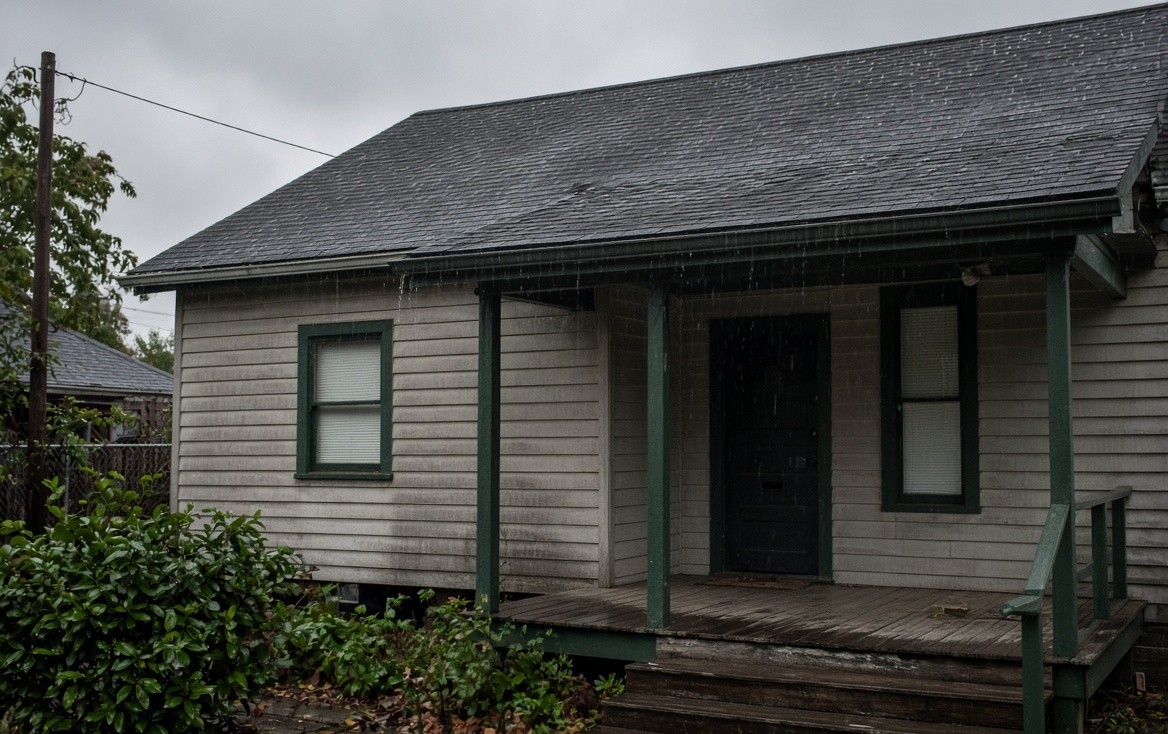
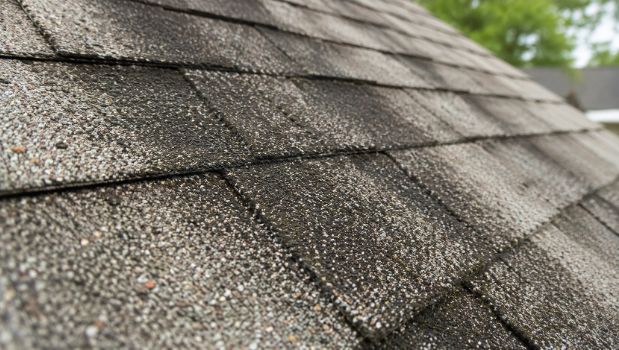
If you’ve noticed dark streaks running down your roof, usually starting near the ridge and fanning out toward the eaves, you’re looking at something almost every South Louisiana homeowner deals with eventually. It shows up most on north-facing slopes, roofs near trees, and homes in humid, shaded neighborhoods, which describes a lot of South Louisiana. Here’s what’s actually causing it and how much you should care.
It’s Not Dirt, and It’s Not Mold
The streaks are almost always a species of blue-green algae called Gloeocapsa magma. It’s airborne, spreading roof to roof on wind and by birds, and it takes hold on shingles that give it something to feed on, specifically the limestone filler used in a lot of asphalt shingle manufacturing. Once a colony establishes itself, it grows slowly across the shingle surface and darkens as it matures, which is why streaking tends to get worse over a period of years rather than appearing overnight.
It’s easy to confuse with soot, dirt buildup, or mold, but the pattern is a good tell. Algae streaking almost always runs vertically down the slope from a starting point near the ridge or a shaded valley, following the path water takes as it sheds off the roof. Dirt tends to sit more evenly across a surface. Mold, which is a different organism entirely and far less common on a roof exposed to sun and rain, tends to show up in isolated damp patches rather than long streaks.
Why South Louisiana Sees So Much of It
Gloeocapsa magma needs moisture and warmth to thrive, and our climate hands it both for most of the year. Roofs here rarely get a long dry stretch the way drier climates do, humidity stays high overnight even in summer, and shaded areas under live oaks or near dense tree lines stay damp longer after rain. North-facing slopes are usually hit hardest because they get the least direct sun to dry out between rain events. Routine roof maintenance can also help identify algae growth early before it spreads across large sections of the roof. If your neighbor’s roof already has streaking, yours is a likely candidate too, since the spores travel easily on wind and can hitch a ride during a storm.
Does It Actually Damage the Roof
This is the question that matters most, and the honest answer is: indirectly, yes, but it’s not an emergency.
Algae itself isn’t structurally eating away at your shingles the way rot eats wood. The bigger issue is what it does to the shingle’s performance over time. Dark algae staining absorbs more heat than a clean shingle surface, which raises the shingle’s surface temperature under direct sun. Over years, that added heat cycling contributes to faster aging of the asphalt and can shorten the shingle’s effective lifespan, though usually only modestly compared to other factors like storm damage or age.
The bigger practical concern is usually resale value and curb appeal rather than structural integrity. A roof with heavy black streaking can look far older and more worn than it actually is, which matters if you’re selling a home or just tired of how it looks from the street. Buyers and home inspectors sometimes flag heavy streaking as a sign of roof age even on a roof that still has years of life left, so it’s worth addressing before you list a home even if the roof itself is fine.
When Streaking Signals a Real Problem
Algae staining on its own usually isn’t urgent. What is worth paying attention to is streaking combined with other signs, particularly on shaded, north-facing slopes where moss also tends to take hold. Moss is a different issue entirely. Unlike algae, moss physically holds water against the shingle surface and can work its way under shingle edges, which does contribute to real moisture damage and accelerated decking issues over time. If you’re seeing thick, raised, spongy growth rather than flat black streaking, that’s moss, and it deserves a closer look, not just a cleaning.
It’s also worth checking whether heavy staining is showing up alongside curling shingle edges, granule loss in the gutters, or soft spots in the attic decking, the kind of signs we covered in our piece on roofs that won’t survive another hurricane season. Algae on a roof that’s otherwise sound is a cosmetic and mildly performance-related issue. Algae on a roof that’s already showing those other signs is one more data point that the roof is nearing the end of its useful life.
What to Do About It
If the streaking bothers you or you’re preparing to sell, a soft wash is the right approach, low-pressure application of a cleaning solution designed for asphalt shingles, rather than a pressure washer. Pressure washing an asphalt roof strips granules and can void your shingle manufacturer’s warranty outright, which turns a cosmetic problem into a real one. This isn’t a DIY project worth rushing; a soft wash done wrong with the wrong chemical concentration can damage landscaping, gutters and other roofing accessories, and painted surfaces below the roofline.
If you’re re-roofing anyway, ask about algae-resistant shingles, often labeled AR on manufacturer spec sheets. It’s also worth asking whether your contractor uses hand-nailed roofing installation, which can provide more consistent fastening than machine nailing when installed by an experienced crew. These use copper or zinc granules mixed into the shingle surface, which slowly release ions that inhibit algae growth. Most major manufacturers now offer these as standard or a low-cost upgrade, and given how common algae growth is in our climate, it’s usually worth the small difference in cost on a new roof.
If you’re not sure whether what you’re looking at is algae, moss, or something tied to an actual roof problem, that’s worth a real inspection rather than guessing from the ground. We can take a look, tell you honestly whether it’s cosmetic or something more, and walk you through cleaning or shingle options if you want it handled.